
Blog

DDoS/DoS attacks: experience-based insight. Part I

Today everyone knows about DDoS/DoS attacks. The buzz about them is everywhere: on the internet, TV, etc. You don't have to be an experienced user to face the consequences of these attacks, when you visit, for example, a favorite news portal and see the “service is unavailable” message, here it is – the DDoS/DoS attack.
14 October 2014
Cybersecurity testing
Web app testing
Article by a1qa
a1qa

Today everyone knows about DDoS/DoS attacks. The buzz has long spread beyond security testing and is now everywhere: on the internet, TV, etc. You don’t have to be an experienced user to face the consequences of these attacks, when you visit, for example, a favorite news portal and see the “service is unavailable” message, here it is – the DDoS/DoS attack.

Even knowing what the letters DDoS/DoS stand for, do you understand what they mean? DoS means Denial of Service, which is a malicious activity aimed at a web-site to make it unavailable for legitimate users. DDoS means Distributed Denial of Service, which is an attack performed by several computers.

The most often motives for carrying out DDoS/DoS attacks are:

  • Political protest
  • Unfair competition
  • Blackmailing
  • Personal issues

The first DoS attack was registered in September 1996. A few days after the first attack – on September 19th – Carnegie Mellon University computer team of fast response to information security incidents published a brochure about DDoS/DoS attacks. In 1999-2000 when the largest portals like Ebay, Amazon and Yahoo couldn’t handle the attacks the information about them spread around the world. Several years later in 2010 DDoS attacks became notorious again. Hackers started applying them for political protests and attacked the biggest e-commerce systems, like Paypal, Visa and MasteCard. Recently attacks have become more powerful, for example, in 2013 hackers performed a 300 Gbps attack, while in 2014 they reached a record of 400 Gbps.

DoS attack: behind the scenes

Today all attacks can be divided into three big categories depending on the target:

  • Server network connection attacks
  • Server CPU time attacks
  • Server memory attacks

Server’s network connection attacks are aimed at server bandwidth. Hackers generate a huge stream of spurious traffic towards the goals, applying botnet or vulnerable internet servers. The attack can be compared with a traffic jam with stuck ambulance; ambulance here means connections of legitimate clients. On the scheme below you can see how the attacks with vulnerable DNS servers are performed.
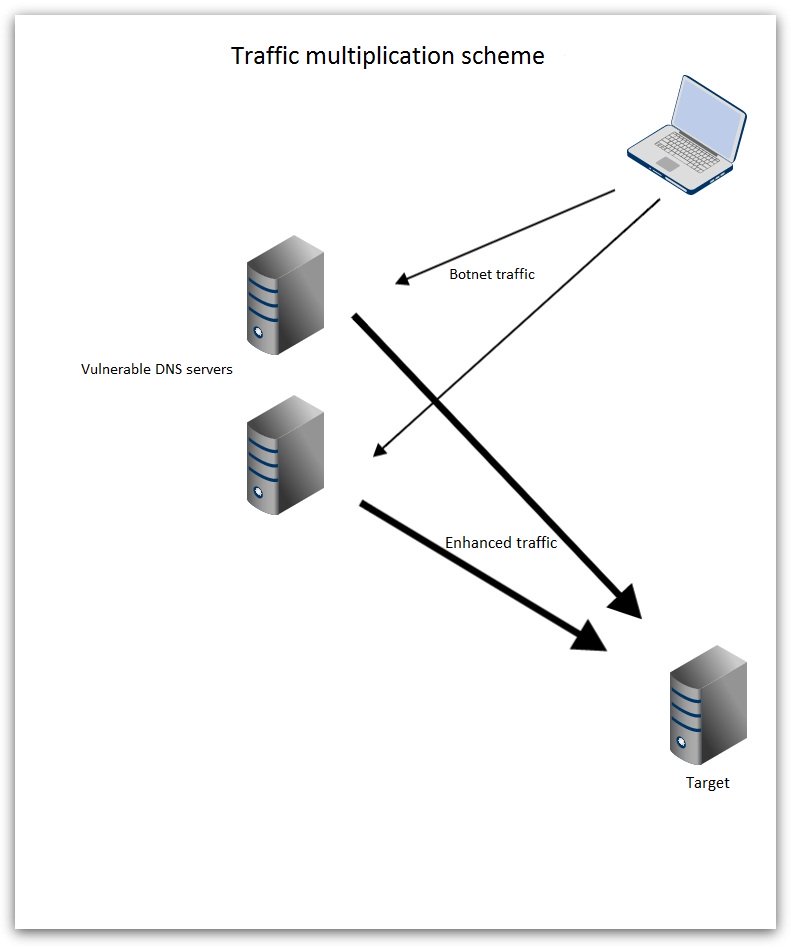
From the technical viewpoint channel attacks are very difficult. They shouldn’t run for a long period, otherwise they can harm the hacker’s system itself. Protection against these attacks is very pricey. A company has to buy expensive equipment to detect and block the attacks, or it addresses a 3rd party security provider.

Still, users should understand that this kind of attacks cannot be aimed at a blog, because the cost of the attack performance and the result are not equal.

In the next blog post we’ll cover the topics of server CPU time and server memory attacks.

More Posts

30 January 2026,
by a1qa
5 min read
Strategic QA: The foundation of digital transformation
Digital transformation moves fast. Discover how modern QA helps you deliver change at speed by identifying high-stakes risks before they impact your reputation or your bottom line.
Cybersecurity testing
Functional testing
Performance testing
Quality assurance
Usability testing
31 December 2025,
by a1qa
5 min read
OWASP Top 10:2025: what changed and how QA helps reduce risk
As AI speeds up development and attackers exploit business logic, the latest OWASP Top 10 exposes why traditional security checks fall short and how QA must evolve to protect modern web applications.
Cybersecurity testing
25 June 2025,
by a1qa
5 min read
Microservices testing: strategies for resilience, speed, and precision
Learn how a thoughtful QA strategy can keep distributed systems running like clockwork.
Cybersecurity testing
Performance testing
Test automation
14 April 2025,
by a1qa
5 min read
Cybersecurity: Top 5 questions to ask a QA vendor
What information to request from QA providers to get confident in the complete security of your software and protect end-user sensitive data? Read about that in the article.
Cybersecurity testing
2 December 2024,
by a1qa
6 min read
Addressing 4 security issues for digital transformation programs
Find out the top 4 safety challenges of digital transformation and a QA playbook to address them and contribute to a higher level of cybersecurity.
Cybersecurity testing
Migration testing
QA in Fintech
black-friday
5 November 2024,
by a1qa
4 min read
Get ready for Black-Friday-to-Cyber-Monday shopping: 5 testing types to include in your QA strategy
What’s your nightmare during Black Friday and Cyber Monday shopping? If it’s a loss of sales, read about the ways to prevent this in the article.
Cybersecurity testing
Functional testing
Localization testing
Performance testing
Usability testing
QA for retail software
29 August 2024,
by a1qa
4 min read
QA to address key pain points in retail 
Explore how QA helps address the main challenges that retailers face when developing software.
Cybersecurity testing
Functional testing
Performance testing
Usability testing
QA to ensure smooth migration to the cloud
15 August 2024,
by a1qa
3 min read
QA to ensure smooth migration to the cloud
Learn how effectively migrate to the cloud by implementing QA activities.
Cloud-based testing
Cybersecurity testing
Functional testing
Migration testing
Performance testing
Quality assurance
Test automation
QA for fintech
7 May 2024,
by a1qa
5 min read
Navigating the fintech frontier in 2024: QA’s role in delivering high-quality financial software 
Unveil the future of fintech innovations and learn to refine their quality with the help of software testing.
Blockchain app testing
Cybersecurity testing
QA in Fintech
Quality assurance

Get in touch

Please fill in the required field.
Email address seems invalid.
Please fill in the required field.
We use cookies on our website to improve its functionality and to enhance your user experience. We also use cookies for analytics. If you continue to browse this website, we will assume you agree that we can place cookies on your device. For more details, please read our Privacy and Cookies Policy.