
How to ensure high software quality that keeps up with Agile speed

Ten years ago, few people would have believed it was possible to roll out product features within hours. Today, this has become a standard project requirement. However, it may be fraught with the risk of poor software quality, as while trying to meet shortened release cycles, teams may overlook vital verifications necessary to ensure faultless operation.
The cost of this miscalculation may vary from small issues disrupting effective user experience to crashes due to inability to withstand extreme loads during major sales events. In these circumstances, the question facing modern enterprises is no longer whether they can move fast, but how they can do so without compromising excellence.
In this article, we look at the challenges companies face today, reasons why traditional QA falls short, valuable strategies for quality at speed, increased role of AI and test automation, business benefits derived from a modernised approach, and actionable steps for leaders.
Why software quality struggles in high-velocity Agile environments
Ensuring quality in the context of hyper-agile delivery requires first understanding the core challenges that threaten it:
Continuous delivery pressure
Continuous delivery prioritizes speed, but frequent releases can compress testing windows. This creates a speed trap where minor defects reach users faster, gradually eroding standards and eventually leading project teams to accept lower quality as the new normal.
Intricate architectures
The complexity of modern microservices creates hidden dependencies where a single change can cause system-wide failures that traditional testing can’t catch. Without focusing on how components interact, isolated testing allows minor changes to trigger unpredictable crashes.
Increased customer expectations
User expectations now dictate quality standards. Because competitors are just a click away, even minor glitches can lead to immediate churn, forcing teams to deliver flawless performance at a breakneck pace.
Traditional QA often struggles to address these issues. As continuous delivery accelerates release cycles, manual testing leaves gaps where defects can slip into the production environment. At the same time, siloed QA teams amplify the complexity of modern architectures by slowing feedback and creating bottlenecks in systems that demand seamless collaboration. Most critically, reactive QA approaches fail to meet rising customer expectations, as issues are often discovered only after they impact real users. In a landscape shaped by speed, complexity, and little tolerance for failure, older QA methods can’t ensure consistent quality.
Practical approaches to ensuring superior quality at high speed
Achieving quality at Agile speed requires a fundamental shift in how and where testing happens. Instead of relying on a single phase, modern teams distribute quality practices across the entire life cycle:
Shift-left testing
By weaving various verifications into the actual writing of code, project teams catch and fix issues early enough, before they grow into bigger problems. Automated tests run constantly during the entire SDLC, offering faster feedback and preventing major crashes later on. This forward-thinking method improves software health while allowing for quicker, more certain launches.
For example, with the help of shift-left testing, within very tight deadlines a large UK-based real estate company managed to release a flawlessly working multi-functional web portal and a native mobile app for iOS/Android serving millions of end users across the entire country.
Shift-right approach
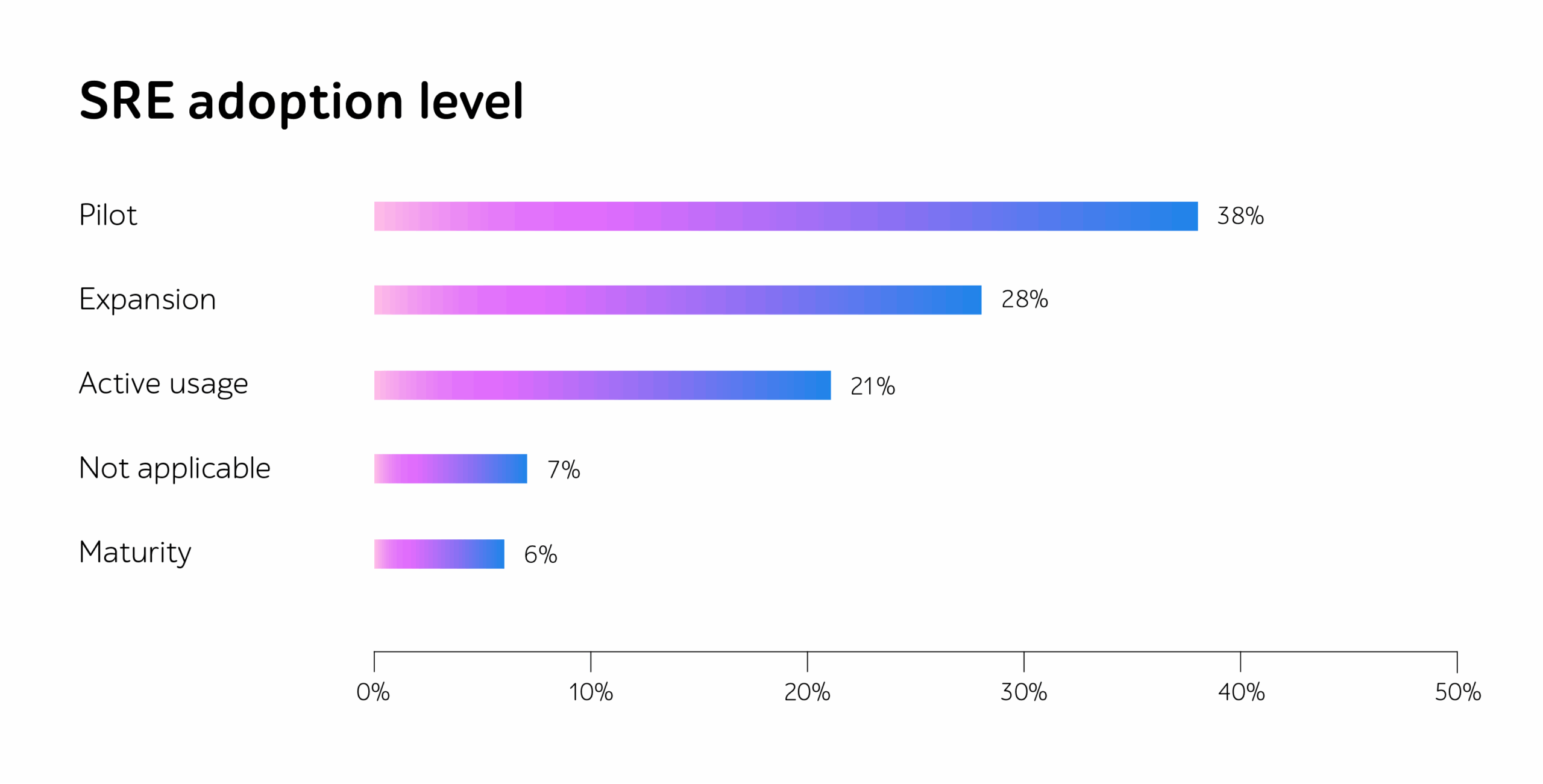
Shift-right focuses on testing IT products in real-world conditions. By extending validation into the production environment through techniques like chaos engineering, project teams can uncover defects that only appear under real user behavior and system load. No wonder that only 7% of the World Quality Report 2025-26 respondents stated that they don’t leverage SRE best practices.
Continuous testing
According to Gartner, automated continuous testing boosted agility for 42% of interviewed respondents. Why? When every change in the code of an IT product is reviewed automatically, all project members can keep building without fear. Containerized environments allow tests to run consistently across different setups, while scaling effortlessly to match growing demands. This strategy creates an ongoing feedback loop that evolves in sync with every new line of code.
AI-driven quality engineering
Smart AI tools are changing the way project teams build, run, and fix tests. Rather than just writing every step by hand, engineers can use AI to create new checks, analyze past mistakes, and predict the most dangerous spots where defects may occur. These systems get smarter every time something breaks. Moreover, self-healing test frameworks save time by updating themselves in case of any UI alterations, removing the slowest part of traditional testing.
All these can significantly simplify and speed up QA cycles. For instance, with the help of AI-driven automated workflows an iGaming developer accelerated regression testing processes by almost 1,600 minutes, while smoke testing – by 300 minutes. Or another example. With the help of a customized, AI-driven test automation framework, an automotive services provider halved regression testing time. At the same time, a developer of social games strengthened automated workflows with AI (GitHub Copilot), which streamlined automated test development by almost 30%, saving 788 hours just in 9 months. Moreover, an eCommerce platform creator infused AI-powered test automation, which helped them attain 4X regression testing time reduction and automate 90% of tests.
What does this complex strategy bring to the table?
Organizations that maintain quality at speed can achieve several measurable gains, including:
Reduced risks
Moving fast doesn’t mean breaking things. When organizations automate tests and verify code daily, software issues are blocked early in the process. This prevents pricey fixes later, avoids downtime, and ensures customers never have to deal with a broken or buggy IT product.
Boosted CX
When interacting with different software solutions, people expect only flawless user journeys. By ensuring every new version is polished, project teams create lasting confidence, making organizations they work for stand out and transforming satisfied users into vocal supporters who champion their brands to everyone.
Better velocity
By automating tests, organizations get faster results and can push out features whenever they want. The work that once took a long time to complete now can be handled in a flash, allowing businesses to outpace others and act on emerging trends.
Minimized technical debt
Quickly catching errors and running regular checks keeps minor glitches from turning into major headaches. Rather than ignoring hidden glitches that eventually force a massive project overhaul, developers can solve them as they go.
How leaders can enable high quality in fast delivery
Building quality in hyper-agile environments is, among other things, leadership responsibility. Companies that succeed are those where leaders drive the following activities:
Nurture shared ownership
Quality belongs to everyone, not just one particular department. People in charge need to build a culture where every person, from business analysts to sales, feels responsible for the final product. By making excellence a daily habit and encouraging open communication, the whole company becomes accountable for creating IT solutions that drive value to end users.
Establish a system of metrics
Management needs to rely on clear markers that show if everything is working as intended. Using metrics like flakiness rate, production defects, MTTR, customer-impacting incidents, etc., provides an honest view of the software’s health. If one infuses these KPIs into automated systems, quality becomes a constant and visible part of everyday workflows, thus preventing any negative surprises.
Cherry-pick the right tools
Traditional tools may not keep up with today’s fast pace. On the contrary, smart AI and cloud systems help QA teams handle tricky tasks, grow their testing quickly, and keep everything running the same way everywhere. This means workers spend less time on maintenance and more time on building new features.
Bottom line
The journey toward quality at speed requires moving beyond outdated models and embracing a new way of thinking, one where quality is continuous, AI-empowered, and deeply integrated into the flow of work. As Agile accelerates, the organizations that thrive will be those that treat quality as a shared responsibility, built into every step instead of something checked at the end.
Do you struggle to meet quality gates at high speed? Contact a1qa’s team to get a free consultation.